
AI Media Buying for Health and Nutrition Brands
MAI monitors the signals that move CAC across your ad accounts and business, then helps you understand what changed and what media decision to make next.
Health and nutrition brands operate on some of the tightest unit economics in DTC. For many, the first purchase barely breaks even. Profit comes from repeat purchases, subscriptions, and customer lifetime value, so there is not much room for acquisition costs to drift.
A CAC increase from $21 to $35 may not look dramatic in a dashboard. It can still wipe out the economics of an acquisition program.
In the account, this rarely shows up as one obvious failure. Creative loses a little efficiency. Search demand shifts. A landing page converts a little worse. None of those changes looks serious on its own, but the economics can still move before the weekly review catches up.
How CAC drifts before the account looks broken
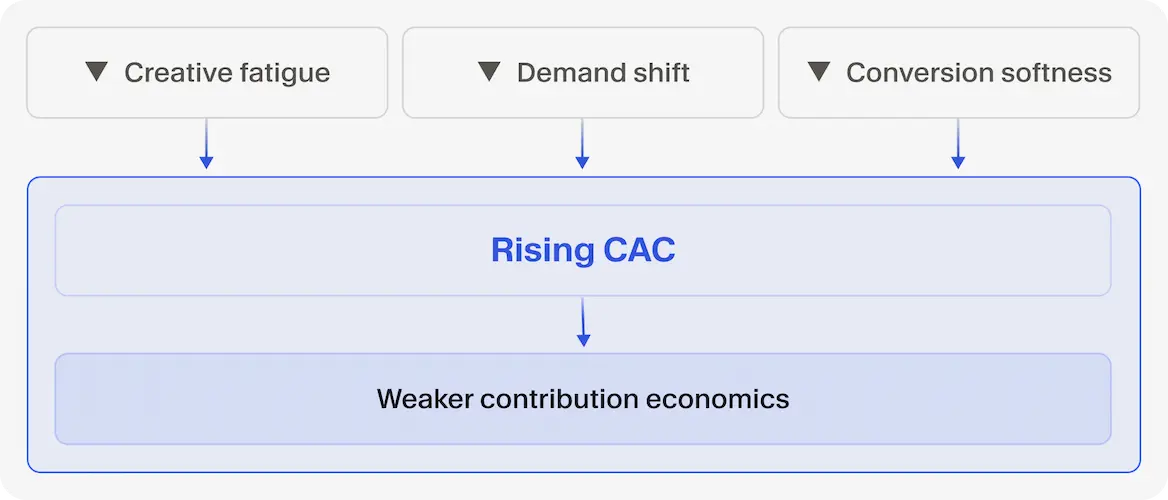
Profitability can deteriorate through several small changes before any one dashboard metric looks alarming.
Creative fatigue becomes a profitability problem
On Meta, creative fatigue is inevitable. The problem is leaving spend behind yesterday’s winners after the economics have started to move.
An ingredient story or customer testimonial can perform well for days before frequency rises, click-through rates soften, and acquisition costs begin to climb. Because the decline is gradual, teams can tolerate it longer than they should.
A better operating rhythm is to start testing the replacement before the winner is clearly tired. That gives the team room to move while the current ad is still carrying spend, instead of waiting for CAC to make the decision obvious.
| Signal | Early | Mid-cycle | Later |
|---|---|---|---|
| Ad performance | Stronger | Softening | Weaker |
| CAC | $21 | Rising | $35 |
| Frequency | Lower | Rising | Higher |
Figure 1. Frequency and acquisition cost can rise gradually while ad performance weakens, making fatigue expensive before it becomes obvious.
A weekly review can be too slow here. The individual changes look modest even when CAC has already moved enough to matter.
Customers move across platforms even when reporting does not
Performance marketers often evaluate Meta and Google separately. Customers do not behave that way.
Someone may discover a hydration product on Instagram, continue scrolling, and later search Google for the ingredient or product category. Search records the conversion, but Meta helped create the demand.
That matters in health and nutrition because customers often research ingredients, compare products, and revisit the purchase before converting. Channel-by-channel reporting can tell you where the purchase finished without fully explaining how demand developed.
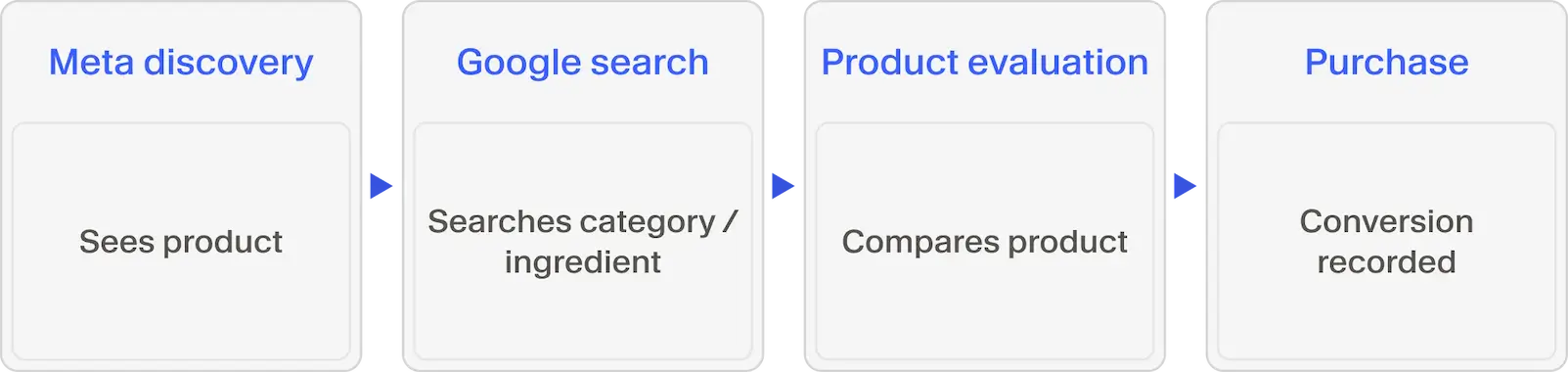
For a media buyer, final conversion credit is not enough to make the channel decision.
Why weekly review can be too slow
Creative fatigue rarely arrives as one dramatic drop, and search demand does not wait for the next reporting meeting. If both shifts are reviewed weekly, the account can spend several days against conditions that have already changed.
For a business with narrow first-purchase economics, that delay matters. The job is to connect the signals, understand what probably changed, and decide what to do while the opportunity is still available.
How MAI manages media buying for health and nutrition brands
MAI is useful here when those signals can be read together. The job is to work out what changed, what moved with it, and whether the economics are different enough to justify a media change.
On Meta, MAI is designed to respond to creative fatigue. On Google, it can adjust bids based on the value of landing pages and keyword groups. As demand shifts across platforms, MAI can recommend reallocating spend instead of waiting for the next planning cycle.
Those recommendations can draw on signals that standard ad-platform reporting does not fully capture:
- SKU-level margins, which help determine what traffic is actually worth.
- Promotions, which can change conversion rates quickly.
- Inventory-related behavior, such as falling add-to-cart rates or rising abandonment.
- Campaign, landing-page, and website behavior that can help explain what changed.
For the marketer, that means noticing the change, adding the business context, and only changing the account when the economics support it.
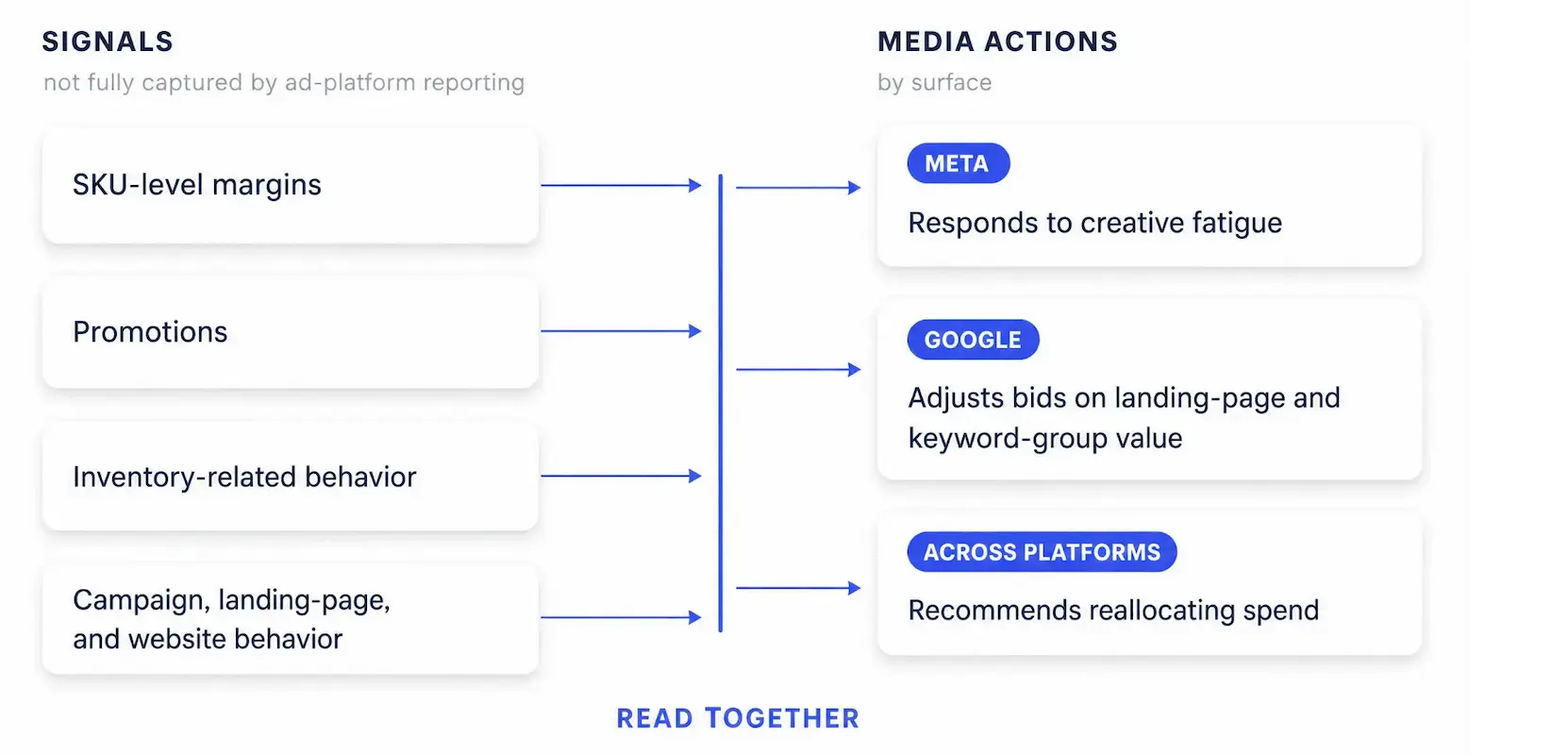
From signal to recommendation
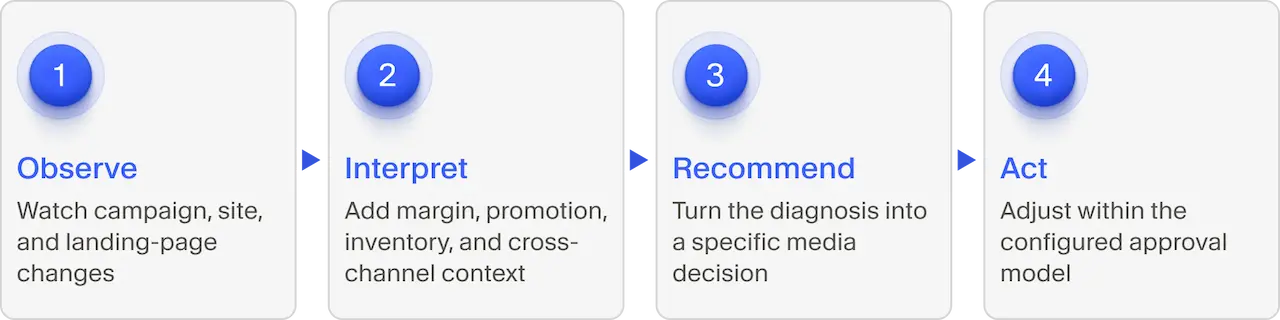
Profitable growth depends on hundreds of small decisions
Health and nutrition brands rarely lose profitability because of one dramatic mistake. More often, a series of small decisions lands a little too late: a tired ad runs longer than it should, demand moves before budget does, or a change in business context takes too long to reach the account.
AI is useful here when it helps the team spot those changes sooner, understand what they mean, and make the media decision while it still matters.
See how MAI can shorten the path to a media decision
Connect creative, cross-channel demand, margins, promotions, and inventory signals to ongoing recommendations and optimization.
Similar articles
Your Ad Platforms Don't Talk to Each Other. Your AI Agent Should.
- AI Media Buying
- Cross-Channel Marketing
- Paid Media
- Media Buying
- AI Agents
Google and Meta optimize their own ecosystems. An AI agent connects cross-channel signals to better creative and budget decisions.
Where Should the Next Dollar Go?
- Budget Allocation
- Marketing Mix Modeling
- Marginal ROAS
Measure what your spend drives, compare the return on the next dollar, and validate the decision with incrementality experiments.
What Is an AI Performance Marketing Agent?
- AI Agents
- AI Media Buying
- Performance Marketing
- Paid Media
- Marketing Automation
An AI performance marketing agent continuously monitors paid media, works out what changed and why, and can carry decisions through to action within defined permissions.