What We Heard at eTail Boston and GROW NY
- Agentic AI
- AI in Retail
- Retail Marketing
- AI Personalization
What we heard at eTail Boston and GROW NY 2026, from agentic AI and cost pressure to career anxiety and the limits of personalization.
Analysis, experiments, and practical lessons from the team building and running MAI on real ad budgets.
What we heard at eTail Boston and GROW NY 2026, from agentic AI and cost pressure to career anxiety and the limits of personalization.
Compare the infrastructure, engineering, control, and ongoing costs behind building or buying an AI media buying system for an agency.
A field note on using projected ROAS, add-to-cart activity, and SKU trends to tune Google Ads while delayed purchase data matured.
A practical guide to AI media buying for home decor brands across SKU economics, creative testing, inventory, measurement, and account controls.
A practical agentic media buying playbook for DTC brands covering SKU economics, creative testing, exploration, incrementality, and controls.
ChatGPT and Claude can analyze marketing data. Learn what it takes to turn general-purpose AI into a system that can continuously operate performance marketing.
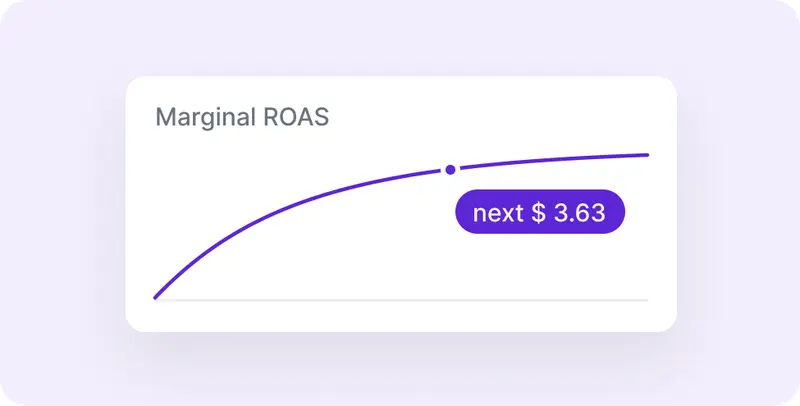
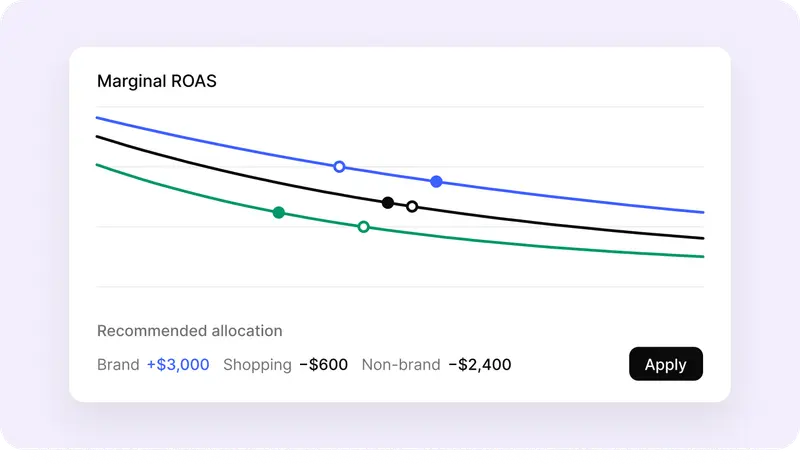
Your best-performing ad channel may not be the best place for the next dollar. Learn how to compare marginal response, business value, and alternative headroom before increasing spend.
What should an AI media buyer do every day? Use this operating loop and weekly work-log test to evaluate monitoring, investigation, optimization, controls, and escalation.
Use your paid-media backlog to decide whether the constraint is human judgment or recurring execution capacity.
Learn which budget changes AI can automate, when human review is needed, and how to set practical guardrails.
Google and Meta optimize their own ecosystems. An AI agent connects cross-channel signals to better creative and budget decisions.
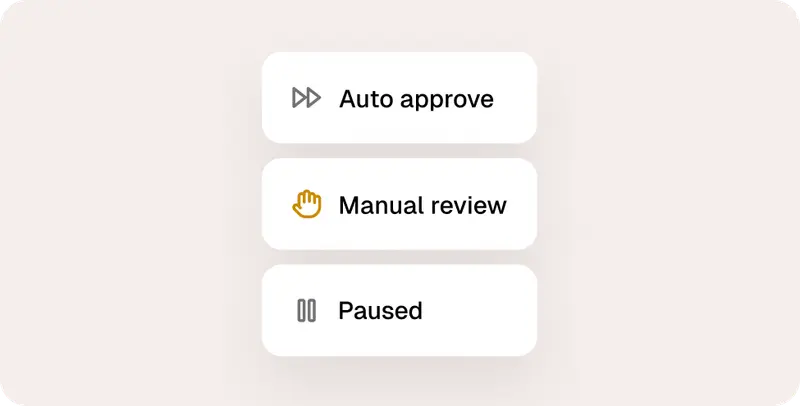
The right level of AI autonomy depends on a decision’s consequence and the business context available to the agent.
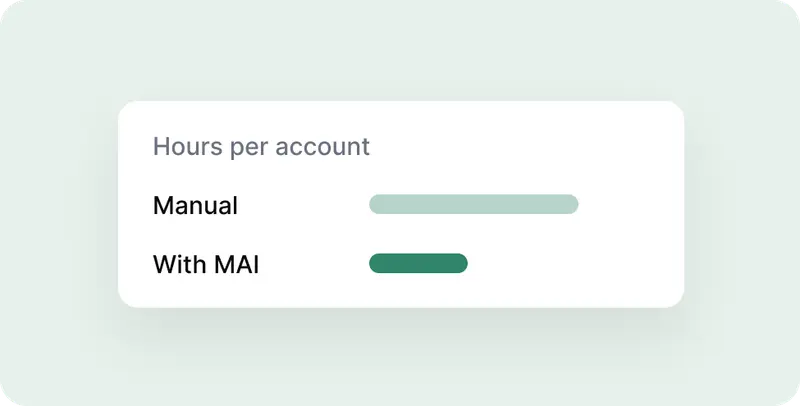
AI agents take on continuous media-buying work so agencies can grow revenue without scaling delivery headcount at the same rate.
AI agents give lean teams the continuous measurement, experimentation, and budget-allocation capabilities once reserved for enterprises.
A comparison of MAI, Smartly, Madgicx, Optmyzr, and Pixis Prism by the media-buying work each tool takes on.
Google and Meta optimize advertising performance at scale. Profitable growth requires bringing business economics into each media decision.
An AI performance marketing agent continuously monitors paid media, works out what changed and why, and can carry decisions through to action within defined permissions.
As media-buying mechanics become automated, the advantage moves to creative judgment and how quickly teams learn what works.
How AI media buying helps health and nutrition brands protect profitability by responding to creative fatigue and demand shifts faster.
Use rules when the action is already known. Use an agent when the situation requires interpretation across signals and business context.
Compare operational analytics, attribution, incrementality, MMM, and performance marketing agents using a practical decision framework for 2026.
See how a conservative Brand Search investment case was validated with A/A and geo-lift incrementality testing before additional budget was funded.
See how AI agents coordinate Google Ads campaigns around the business signals that platforms cannot see on their own.
What we learned building AI for retail and eCommerce: automate complexity, put first-party data to work, and keep human judgment at the center of creative.
Measure what your spend drives, compare the return on the next dollar, and validate the decision with incrementality experiments.
Traditional attribution answers who got credit for past spend. Decision systems need a measurement layer that answers what to do next. Why the gap matters, and how MAI bridges it.
The SaaS instinct for 100% correctness breaks down with agentic systems. On capability, reliability, and designing UX that keeps everything above the red line.