Blog/ AI in PPC

Best PPC Automation Software For E-commerce to Boost Sales Easily

Best PPC Automation Software For E-commerce to Boost Sales Easily
20 min read
Oct 22, 2025

Running profitable ads requires serious effort, and managing every detail manually can quickly burn you out. That’s where PPC automation comes in. The best software for e-commerce cuts wasted spend, scales campaigns faster, and keeps profits growing without all the daily dashboard drudgery.

With the right tool, you can plug in your store data, track performance in real time, and make smarter, faster decisions, without guessing which campaigns actually drive sales. Automation points you straight to what’s working and helps you scale without the busywork.

Platforms like MAI utilize AI agents that prioritize profit, not just clicks. By combining your ecommerce, CRM, and analytics data, you get daily tweaks, transparent reporting, and insights that help you grow with confidence.

In this blog, we will talk about:

What PPC automation software actually does and how it transforms campaign performance

Top tools for e-commerce in 2025, plus what features to prioritize

Tips for setting up, scaling, and measuring results with profit in focus

Let’s dive into how automation can transform your ad spend into steady, scalable revenue, without overexerting your team.

What Is PPC Automation Software for E-commerce?

PPC automation software helps you manage paid ads with less manual fuss. It uses algorithms and data to adjust bids, budgets, and targeting so your ads reach the right shoppers at the right time. That makes scaling up easier and keeps your costs in check.

Definition and Key Features

PPC automation software manages pay-per-click campaigns with rules, AI, or machine learning. Instead of you tweaking every setting, the system makes changes on its own, using performance data.

Key features usually include:

Automated bidding that sets the right price per click

Budget management to keep spending in line

Ad scheduling for running ads at the best times

Audience targeting that adapts to shopper behavior

Performance tracking with clear reports

These tools save hours and reduce errors. No more guessing which keyword bids to change or when to pause a lagging ad. The software handles the routine tasks, allowing you to focus on the big picture.

Some platforms, like ours, go further by linking ad platform data with your e-commerce and CRM systems. That way, you can optimize for profit and long-term growth, not just clicks.

How Automation Transforms PPC Campaigns

When you run campaigns manually, you’re often stuck reacting to results after the fact. Automation flips that by making adjustments in real time. If a keyword suddenly starts converting better, the system can adjust bids right away.

Automation also lets you test more things at once. You can run different ad copy versions, see which one performs best, and let the system allocate spend to the top-performing one. That speeds up learning and reduces wasted spending.

As your store grows, managing numerous keywords and ads manually is simply not realistic. Automation enables you to scale up without hiring a large team or working around the clock. With automation, you can stick to strategy, like picking which products to feature, while the software quietly handles the nuts and bolts.

Differences Between Manual and Automated PPC

Manual PPC means logging in every day, reviewing campaign data, and making changes by hand. It’s slow, and you can easily miss opportunities, especially if you can’t watch performance 24/7.

Automated PPC continues to run in the background. The system uses rules or AI to adjust bids, budgets, and targeting as things change. So your campaigns react faster to shifts in demand or competition.

For e-commerce, automation usually means more efficient ad spend. Instead of chasing clicks, software like ours can optimize for profit by analyzing backend data, not just surface-level metrics.

Benefits of Using PPC Automation in E-commerce

PPC automation gives you more control over your ad budget, helps you hit better audiences, and makes your campaigns easier to manage. It cuts down manual work and improves accuracy, so you can focus on strategy instead of busywork.

Time Savings and Efficiency

Managing ecommerce ads by hand? That’s hours spent adjusting bids, testing keywords, and tracking results. Automation tools do the grunt work for you, so you’re not stuck in dashboards all day. 

Set up rules for budget caps, keyword bids, or ad schedules, and let the system handle the rest. Your campaigns keep running smoothly, even if you’re not constantly watching. When you eliminate repetitive tasks, you gain more time for product launches, creative testing, or enhancing the customer experience. 

For brands on the rise, this efficiency means you can scale up without needing a big team. A lot of businesses see automation as a money saver because you’re not paying for daily manual tweaks. The software does the heavy lifting, and you simply monitor the results.

Improved Campaign Performance

Automation uses data to make quicker, smarter decisions than manual management. It can adjust bids on the fly to favor products with better conversion rates. Your budget is allocated to the ads most likely to drive sales, rather than being wasted on low-performers. Over time, that means a more substantial return on ad spend (ROAS).

Platforms like MAI optimize campaigns daily by pulling together e-commerce, CRM, and analytics data. You can spot growth opportunities you’d probably miss if you only looked at ad platform reports. Automated systems also reduce human error. Forgetting to pause a bad ad or missing a trend? The software catches it. You get steadier performance and fewer dollars down the drain.

Enhanced Targeting and Personalization

Automation makes it easier to show the right ad to the right shopper at the right moment. It can segment audiences by purchase history, browsing, or location, no need to build endless manual lists. You can personalize ad copy and offers for different groups. Maybe new visitors get a discount code, while repeat buyers see bundles. That kind of targeting can really boost conversion rates.

With real-time tweaks, automation ensures ads appear when shoppers are most likely to make a purchase. If certain products sell better on weekends, bids can automatically increase during those times. Using AI-driven tools, you can even predict which segments will bring in the most profit and shift spend accordingly. Keeps your campaigns focused on real business goals, not just vanity metrics.

Top Criteria for Choosing the Best PPC Automation Software

When you’re picking PPC automation software, it really comes down to how well it connects with your store, how much control you have, and the quality of the reporting tools. These factors directly impact how smoothly you run campaigns and how much profit you generate from them.

Ease of Integration with E-commerce Platforms

First, ensure the software integrates seamlessly with your e-commerce platform without any issues. If setup is challenging or you require outside assistance, you’ll waste time and risk data errors. Look for tools with direct integrations for Shopify, Magento, WooCommerce, and other popular e-commerce platforms.

Seamless integration matters a lot. Accurate product, order, and customer data help you run better ads. Without it, you could waste money targeting the wrong people or pushing out-of-stock products.

Check if the software supports real-time syncing too. You want changes to your product catalog (such as pricing or inventory) to be reflected instantly in your campaigns. Delays can burn ad dollars. If you run multiple storefronts, consider managing them all from a single account. That’s a real time-saver and helps avoid mix-ups.

Automation Capabilities and Customization

Automation should make campaign management faster and smarter—but it also needs to adapt to your business goals, not force you into rigid systems.

Flexible Rule Setting – Choose tools that allow you to customize automation rules to match your strategy, such as raising bids only for high-margin products.

Dynamic Optimization – Look for features such as dynamic bidding, budget allocation, and audience targeting to keep campaigns efficient and responsive daily.

Machine Learning Efficiency – Platforms like ours utilize AI to adjust campaigns in real-time, prioritizing profit signals and minimizing wasted spend.

Custom Metric Control – Ensure you can define success based on ROAS, profit margin, or customer lifetime value, not just clicks or conversions.

Manual Override Options – The best systems allow you to pause, edit, or override automation at any time, giving you control during seasonal peaks or sudden changes.

Intelligent automation combines flexibility with control—helping you scale profitably while keeping campaigns aligned with your business goals.

Reporting and Analytics Tools

You need strong reporting tools to see what’s working and what’s not. Clean dashboards and easy-to-read metrics save you from having to dig through raw data. Track spend, revenue, ROAS, and profit all in one place.

Advanced analytics can show you which products, audiences, or campaigns drive the most growth. Maybe you’ll spot that a handful of high-value customers bring in most of your profit. That insight allows you to target similar audiences with a more budget-friendly approach.

Transparency matters too. You should be able to see every change the software makes and understand why it occurred. Platforms like MAI highlight each adjustment, so you’re never in the dark. Suppose the software lets you export or schedule reports, even better. Automated reports save time and make sharing results with your team or stakeholders a breeze.

Best PPC Automation Software for E-commerce in 2025

Picking the right PPC automation tool means you save time, control costs, and get better campaign results. The best platforms focus on profit (not just clicks) and give you clear insights on what’s actually driving growth.

AdScale

AdScale uses AI to automate campaign management across Google and Meta. You set budget rules, and the software adjusts bids and targeting in real time. This helps you avoid wasted spend and keeps campaigns in line with your sales goals.

The platform comes with built-in analytics that connect ad performance to e-commerce sales data. You see which campaigns actually make money, not just impressions or clicks. That makes it easier to shift the budget to the winners.

AdScale works best for small to mid-sized ecommerce businesses that want automation without a complicated setup. It offers automated ad creation, AI-driven targeting, and budget optimization. Reporting is solid, but if you wish for deep customization, you might find it a bit limited.

Optmyzr

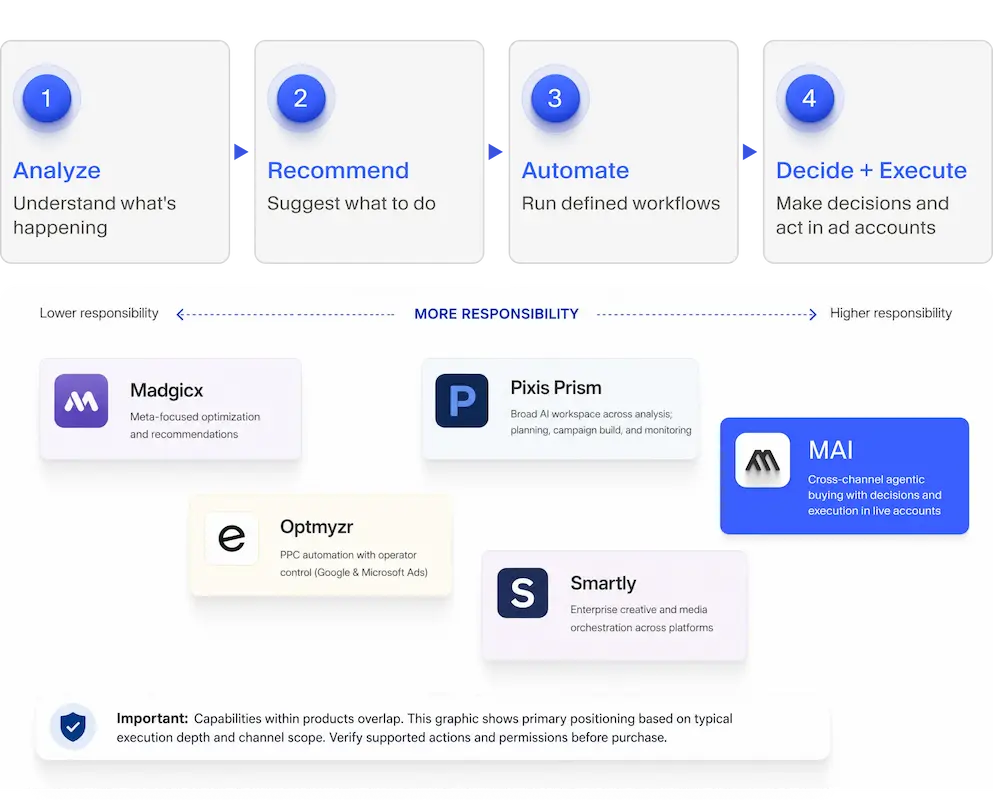
Optmyzr gives you control over automation with customizable rules and scripts. Instead of replacing your input, it lets you design workflows that fit your business. You can set up rules to pause underperforming ads or boost bids on high-converting keywords.

It includes tools for budget pacing, A/B testing, and account audits. These help you identify problems and respond quickly. Do you prefer not to build your own strategies? Use their pre-built ones.

Optmyzr is a good fit if you want flexibility and transparency. It supports Google Ads, Microsoft Ads, and other platforms, making it handy for brands advertising across multiple channels. The learning curve is steeper, but the control you get is worth it.

Marin Software

Marin Software is built for larger e-commerce businesses with complex ad accounts. It connects with Google, Meta, Amazon, and more, providing a single dashboard to manage everything. That makes tracking performance across channels way less painful.

The software uses predictive bidding models to boost ROAS. You can pull in e-commerce and CRM data to optimize for revenue, not just conversions. This data-driven approach helps you scale up while protecting your margins.

Marin also supports cross-channel attribution, so you can see how different ads work together to drive sales. Setup takes time, and it’s pricier than some, but for brands with big budgets, the control and depth are hard to beat.

Comparing Leading PPC Automation Tools

When you’re comparing PPC automation software, the big things to watch are cost, ad network coverage, and support quality. These factors shape how well the tool fits your budget, workflow, and growth plans.

Pricing and Value for Money

PPC automation platforms price things differently. Some charge a flat monthly fee, others take a percentage of your ad spend. If you spend a lot, flat fees usually work out better. Smaller budgets might prefer a percentage model.

Watch for hidden costs, setup fees, minimum spend requirements, or extra user charges that can add up. Transparent pricing helps you plan and avoid nasty surprises.

The real value comes from how much the tool actually boosts your profits. If automation cuts wasted spend by 20% or lifts ROAS by 30%, it basically pays for itself. Our tool, for example, is all about profit-based optimization, so you’re paying for business growth, not just more clicks.

When comparing tools, create a quick table of features versus cost. You’ll see if pricier options really deliver more, or if a leaner tool gives you the same punch.

Supported Ad Networks

Different platforms have their specialties. Some manage only Google Ads, while others handle Meta, TikTok, or Microsoft Ads as well. If your business relies on a single channel, choose a tool that excels in that area.

For e-commerce, Google Ads is still the king. Shopping campaigns, Performance Max, and dynamic remarketing all need strong automation to scale profitably. Tools that plug straight into your product feed and analytics give you an edge.

If you’re running multi-channel campaigns, pick software that covers all your networks. Managing each one separately is a headache and risks uneven performance. A unified dashboard for reporting and optimization keeps you in control.

Bottom line: Ensure the tool aligns with your current ad mix, while also allowing room to expand into new channels in the future.

Customer Support and Resources

Good customer support can really save you a lot of headaches. Some platforms prioritize slow email responses, while others offer live chat, dedicated managers, or onboarding assistance. Usually, the pricier your plan, the better the support you get.

Explore the learning resources each tool offers. Tools like knowledge bases, video walkthroughs, and forums are helpful when you need quick answers instead of waiting for support. Regular webinars or strategy sessions? Those can help you keep up with platform changes, worth a look.

Think about how much guidance you’ll actually want. If PPC automation is a new territory, a hands-on onboarding might be a lifesaver. If you’re already comfortable, you’ll probably care more about getting quick troubleshooting when you need it.

MAI, for example, displays every optimization and action directly on the dashboard. That kind of transparency means you won’t have to ping support all the time just to figure out what’s happening.

How to Implement PPC Automation in Your E-commerce Store

Getting automation to work for you means setting up tools properly, training your team, and avoiding mistakes that can burn through your budget. You’ll want clear goals, solid data, and a process that lines up with your store’s growth plans.

Step-by-Step Setup Process

Getting your automation tool running smoothly starts with a solid setup; each step ensures your campaigns optimize accurately from day one.

Connect Your Ad Account – Begin by linking your ad platform account to your automation tool. Make sure tracking pixels and conversion events are correctly configured on your store. If tracking is off, your campaigns won’t optimize correctly.

Define Your Goals – Set clear objectives such as revenue, profit margin, or ROAS. The automation engine needs specific targets to guide performance decisions effectively.

Sync Your Product Catalog – Align your ads with up-to-date pricing, inventory, and promotions. Many tools allow you to group products by margin or category to focus more budget on high-profit items.

Launch Test Campaigns – Start with a smaller budget to test and observe performance. Review reports daily initially, then transition to weekly check-ins once the results stabilize.

A precise setup builds the foundation for success—accurate tracking, clear goals, and steady monitoring lead to smarter automation and stronger returns.

Best Practices for Onboarding

Smooth onboarding sets the stage for long-term success with automation tools—helping your team stay aligned, informed, and in control.

Train Your Team on Dashboards – Make sure everyone understands how to read and interpret reporting dashboards. Automation manages the work, but your team ensures results align with business goals.

Set Custom Spending Rules – Create custom rules to manage budget safely, like pausing campaigns when cost-per-acquisition (CPA) exceeds a set threshold. This keeps spending under control while the system learns.

Import Historical Data – Upload your past campaign and sales data. The more context AI has, the faster it can identify patterns and optimize effectively.

Keep Data Updated – Notify the system of pricing changes, promotions, or inventory updates right away. Automation only performs as well as the data it receives.

Leverage MAI for Simplicity – With MAI’s daily optimization and transparent reporting, onboarding becomes seamless, and you can instantly see what’s changing and why.

Effective onboarding combines human insight with automation, trains your team, feeds accurate data, and lets AI handle the heavy lifting.

Common Mistakes to Avoid

Even with automation, a few simple missteps can hurt performance, here’s what to watch out for.

Avoid Too Many Goals – Don’t make your system chase clicks, conversions, and profit all at once. Choose one Main objective so it knows what to prioritize.

Check Data Quality – Poor tracking or missing conversion events waste money. Always test your setup before scaling campaigns.

Limit Constant Edits – Frequent changes reset the learning process and disrupt optimization. Give campaigns time to collect real performance data.

Don’t “Set and Forget” – Automation still needs oversight. Review reports, adjust budgets, and align campaigns with your most recent business objectives.

Strike the balance, trust automation for efficiency, but stay involved to guide strategy and ensure profitable growth.

Measuring the Success of Automated PPC Campaigns

Tracking the correct data reveals whether your ad spend is actually generating revenue, not just driving clicks. Use clear metrics, test things out, and continually tweak to ensure automation maintains steady growth.

Key Performance Indicators

Focus on numbers that matter for your business. Clicks and impressions aren’t as crucial as ROAS, conversion value, and profit margins. These indicate whether your campaigns are actually generating a return on investment.

Other big KPIs:

Cost per acquisition (CPA) – what you pay to get a customer

Average order value (AOV) – how much buyers usually spend

Conversion rate (CVR) – what percent of clicks turn into purchases

Track these over time to see if automation’s making things more efficient. If CPA drops and ROAS climbs, you’re on the right track. Don’t forget about lifetime value (LTV). If new customers from ads stick around and spend more, your campaigns are building real, long-term growth.

A/B Testing Strategies

Testing is still crucial, even with automation. A/B testing allows you to see which version of an ad, landing page, or audience performs better.

Keep it simple, test one thing at a time:

Ad copy: Try different calls to action

Creative: Product images vs. lifestyle photos

Audience targeting: Break it out by location or device

Run your tests long enough to get real results. Stopping early can lead you down the wrong path. Automated platforms can rotate ads and push more budget to winners, which saves you time but still gives you control over what gets tested.

When you look at results, stick to profit-driven KPIs. More clicks don’t matter if they’re not turning into conversions or revenue.

Optimizing for Ongoing Growth

Automation isn’t a “set it and forget it” deal. You still need to steer the ship by checking data and making changes. Block out time for regular check-ins. If CPA’s creeping up in a campaign, maybe it’s time to adjust bids, tighten targeting, or pause underperformers.

Use dashboards to track ROAS, CPA, and revenue contribution. Tools like MAI show you daily optimization and transparent reporting, so you know where your money’s going. Double down on what works. If a product campaign is killing it on high-margin sales, consider scaling it or testing similar categories.

Keep tweaking as things change. Markets, seasonality, and competition all play a part. Combine automation with regular oversight, and your campaigns can keep delivering profit and growth.

Future Trends in E-commerce PPC Automation

PPC automation is heading toward smarter AI, tighter connections between channels, and new ways of measuring and delivering ecommerce ads. These trends will shape how you plan and run campaigns in the next few years.

AI and Machine Learning Advancements

AI and machine learning are making targeting and bidding way more precise. Algorithms now examine factors such as purchasing history, browsing habits, and even the time of day to predict who’s most likely to make a purchase.

Automation tools are increasingly taking on more significant responsibilities. They’ll tweak bids in real time, test ad variations faster, and shift spend to high-margin products, often with less manual work. That reduces wasted spending and drives profitability.

Platforms like MAI already use AI agents to optimize campaigns every day, spotting growth opportunities most people would miss. As these models get better with big data, you’ll have more control over profit and efficiency without babysitting every setting.

Integration with Omnichannel Marketing

PPC automation isn’t just about search or display ads anymore. It’s moving toward full integration with social, email, and even retail media networks. Your campaigns can finally work together instead of being siloed.

For example, your CRM data can help target ads, ensuring that high-value customers receive the right offers everywhere. Insights from paid ads can also inform your email or retargeting strategies.

This kind of integration means shoppers receive a consistent experience with your brand, regardless of where they encounter it. With tools that connect e-commerce, analytics, and ad platforms, you can see performance across the whole customer journey, not just one channel.

Predicted Changes in E-Commerce Advertising

E-commerce ads are shifting toward privacy-first tracking and fresh ad formats. With third-party cookies on the way out, you’ll need to lean more on first-party data—think purchase records and site behavior.

Ad platforms continue to roll out more automation. Expect new campaign types where you simply upload creative assets and goals, and the system automatically distributes ads across networks. It’s easier to manage, but you’ll want to keep a close eye on spending to ensure it aligns with your profit targets.

More video and interactive ads are also appearing, as shoppers seem to prefer richer formats. Staying nimble and testing these early can help you stay ahead as e-commerce advertising continues to evolve.

Final Thoughts

Scaling ecommerce ads doesn’t have to mean working longer hours or second-guessing every click. With the right PPC automation software, you can manage more campaigns, reduce waste, and drive better results, without the daily grind. From optimizing bids to spotting high-margin products, AI tools help you focus on strategy while the system handles the heavy lifting.

Whether you're running a small store or scaling a high-growth brand, automation brings speed, clarity, and profit-first decisions that manual setups just can’t match.

Want a tool that optimizes daily, connects to your ecommerce data, and keeps you in control? Try MAI for free and let AI grow your sales, without the guesswork.

Frequently Asked Questions

Selecting the right PPC automation software hinges on features, cost, ease of use, and support for platforms such as Google Ads or Amazon. AI-driven tools can save you time, sharpen targeting, and help you focus on profit instead of just chasing clicks.

What features should I look for in PPC automation software for an e-commerce business?

Look for tools that automate bidding, track conversions, and segment audiences. Reporting that shows profit, not just clicks, is crucial. Daily optimization and integration with your store data can really boost your results.

Are there any cost-effective PPC management tools for small to medium-sized e-commerce companies?

Definitely, there are plenty of options that offer flexible pricing, so you don’t need a huge budget. Some let you pay only for the features you actually use, making automation accessible without big agency fees.

How does PPC automation software improve Amazon advertising campaigns?

Automation can adjust bids in real time to match what shoppers are looking for. It identifies which products perform best and reallocates spend to them, cutting wasted ad dollars and boosting your ROI.

Can you recommend some user-friendly PPC management software for beginners?

Look for platforms with simple dashboards and transparent reporting. Tools like MAI focus on making results easy to follow, but still use advanced optimization behind the scenes. That way, you learn faster and don’t get overwhelmed.

What are the benefits of using AI-driven tools in PPC automation?

AI can crunch thousands of data points in a snap. It identifies growth opportunities, optimizes campaigns daily, and ensures your budget is allocated where it matters most. You save time and get more accurate results.

How does Optmyzr differentiate itself from other PPC automation tools in the market?

Optmyzr really leans into giving you more control over custom rules and reporting. Meanwhile, MAI’s all about profit-focused automation that quietly does its thing every day, no need to fuss with complicated scripts unless you’re into that. So, you can stay hands-on if that’s your style, or just let the AI take over and do the heavy lifting.